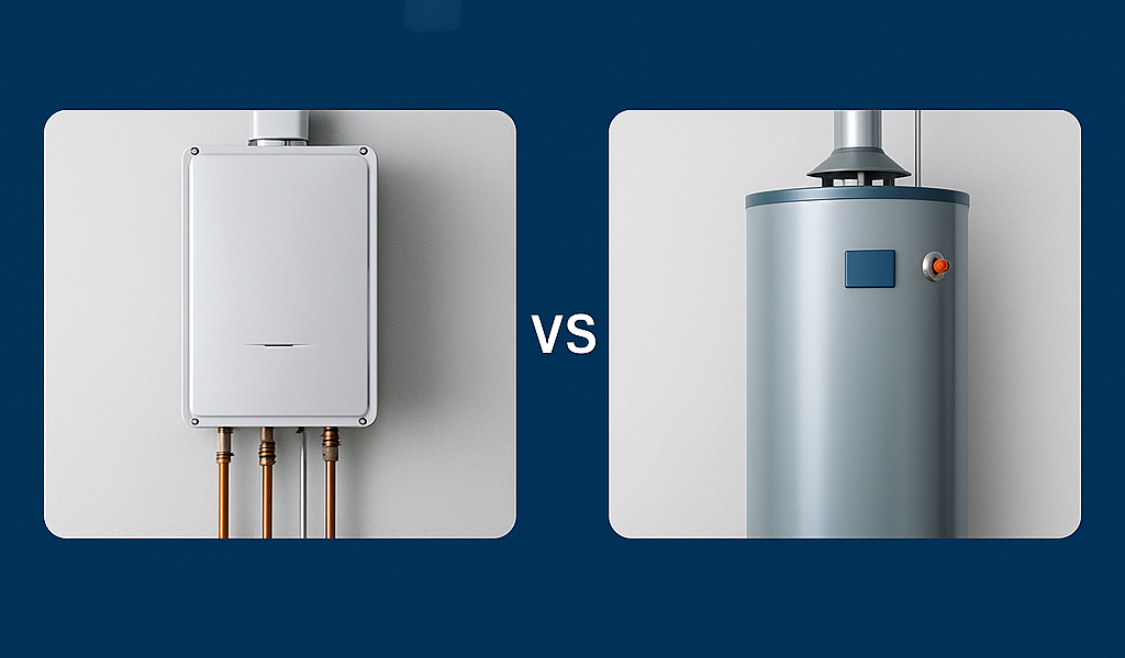

Simple Steps to Stay Safe, Prevent Damage, and Know When to Call a Plumber
When you spot water around your hot water tank, it’s stressful. Is it about to burst? Do you shut something off? Is this a “call now” emergency or can it wait? Take a breath. You can make things safer in a few simple steps before a plumber arrives. This guide walks you through:
- What to do right now
- How to tell if it’s an emergency
- When a leaking hot water tank can be repaired – and when it’s usually replacement time
First: Safety Check (Before You Touch Anything)
If you see any of the following, skip straight to calling a licensed plumber right away:
- Water near electrical outlets, cords, or panels
- A strong gas smell
- A bulging or badly deformed tank
- A ceiling below the tank that’s sagging or dripping
Do not walk through standing water to reach breakers or gas valves. Your safety comes first.
For more safety guidance around gas and electrical emergencies, you can also review:
Step 1: Turn Off the Power to the Hot Water Tank
How you do this depends on the type of tank you have.
For Electric Hot Water Tanks
- Go to your electrical panel
- Flip the breaker labeled “Hot Water Tank,” “Water Heater,” or “HWT” to the OFF position
This reduces the risk of electrical issues and also stops the tank from continuously heating.
For Gas Hot Water Tanks
- Find the gas control knob on the front of the gas valve (usually marked ON / PILOT / OFF)
- Turn it to OFF (or at least down to PILOT)
If you smell gas, don’t touch switches or flames. Leave the area and call your gas provider or emergency services as instructed by local guidelines, then call a licensed gasfitter/plumber.
For more background on gas appliance safety and rules in BC, you can read:
Step 2: Shut Off the Water Supply to the Tank
Next, you want to stop more water from entering the tank.
Look for the cold water shut-off valve:
- Usually a lever or round handle on the pipe above the tank
- Turn a lever so it’s across the pipe (perpendicular) to shut it off
- Turn a round handle clockwise until it stops
If this valve doesn’t move, feels stuck, or starts to drip when you touch it, don’t force it. Note it for the plumber and move on to containing the leak. If you cannot shut off water at the tank and the leak is heavy, you may need to use the main water shut-off for the house or unit. That will turn off water to the entire property but can prevent major damage.
Step 3: Contain the Leak and Protect Your Home
Now that you’ve stopped (or at least slowed) the source, try to limit damage:
- Towels and buckets:
Place towels where water is spreading and buckets or trays under active drips.
- Move belongings:
Slide boxes, rugs, and furniture out of the wet area if it’s safe to do so.
- Use a floor drain if available:
Gently push water toward a floor drain with a broom or squeegee.
- Avoid shop-vacs in deep water unless you’re sure they’re rated and plugged into a safe outlet away from the water.
You don’t have to make it perfect – just slow the damage until help arrives.
Step 4: Take a Quick Look at Where It’s Leaking From
You don’t need to diagnose it like a plumber, but noticing where the water is coming from can help:
- Top of the tank
- Around the pipes or fittings
- May be a loose connection or failing fitting
- Side of the tank
- Around the temperature & pressure (T&P) relief valve
- A small pipe points down the side of the tank – if it’s dripping or running, the T&P valve may be opening or failing
- Bottom of the tank
- A steady trickle or pooling directly under the tank often means the tank itself has rusted through
- Sometimes it’s from the drain valve near the bottom if that valve is leaking
Make a mental note or take a quick photo. Then, call your plumber and describe what you’re seeing.
Is a Leaking Hot Water Tank an Emergency?
Short answer: sometimes yes, sometimes no. Here’s a quick way to think about it.
It’s Usually an Emergency If:
- Water is pouring out, not just a slow drip
- You can’t shut off the water at the tank or main
- The leak is above a finished space (like a suite or finished basement) and water is already damaging ceilings or walls
- The tank is very hot, making strange noises, or the T&P valve is discharging hot water
- There’s any sign of electrical hazard or gas smell
In these cases, call a licensed plumber immediately for priority service. The goal is to prevent major damage or a dangerous situation.
It’s Usually Urgent but Not “Middle-of-the-Night” Emergency If:
- The leak is a small drip or small puddle that you can manage with a towel or pan
- You’ve successfully shut off power and water to the tank
- You still have some hot water for now, but you’ve just noticed moisture or rust stains
You should still book a same-day or next-available visit, because leaks almost never fix themselves. But you may not need a midnight call-out if the situation is stable and safe.
Common Causes of a Leaking Hot Water Tank
Here are some of the most common reasons we see hot water tanks leaking in Metro Vancouver homes:
- Aging Tank (Rust and Corrosion)
- Most tanks have a typical lifespan of 8–12 years (sometimes less in hard water areas).
- Over time, the inner steel wall rusts, and eventually water finds a way out.
- If the tank body is leaking, it’s almost always replacement, not repair.
- Loose or Failing Pipe Connections
- Fittings at the top of the tank can loosen or corrode.
- Sometimes a leak from the top runs down the side and looks like “bottom” leakage.
- Faulty Temperature & Pressure (T&P) Relief Valve
- This safety valve opens if the tank pressure or temperature is too high.
- If it’s constantly dripping or spraying, it may be failing, or the tank may be operating at unsafe pressure – both need expert attention.
- Leaking Drain Valve
- The small valve near the bottom used for flushing the tank can start to drip.
- Sometimes it can be repaired or replaced without replacing the whole tank.
- Excessive Pressure or Thermal Expansion
- High municipal water pressure or lack of an expansion tank can stress your hot water tank.
- Repeated stress speeds up wear and tear and can cause leaks.
Repair vs. Replace: What Will a Plumber Likely Recommend?
Every situation is a bit different, but here’s a general guide:
A Repair May Be Possible If:
- The leak is coming from:
- A pipe connection
- The T&P valve
- The drain valve
- The tank is relatively new and otherwise in good condition
- There’s no visible rust, bulging, or major corrosion on the tank shell
In those cases, fixing the connection or replacing a valve can buy more years of service.
Replacement Is Usually the Best Option If:
- Water is seeping from the tank body (inside the shell)
- There is significant rust or corrosion on the tank
- The tank is at or past its expected lifespan
- You’ve had multiple issues with the same tank already
In many cases, money spent trying to “band-aid” an old leaking tank is better put toward a new, efficient hot water tank or tankless system.
For more detail on hot water temperatures and energy savings, see:
How DDC Mechanical Can Help (Metro Vancouver & Surrounding Areas)
A leaking hot water tank is stressful, but you don’t have to troubleshoot it alone.
When you call DDC Mechanical, here’s what you can expect:
- Licensed, Red Seal plumbers and gasfitters
- Advice over the phone on what to shut off and how to stay safe until we arrive
- Honest assessment: if a repair is safe and cost-effective, we’ll tell you; if it’s truly time to replace, we’ll walk you through options
- Replacement options tailored to your home:
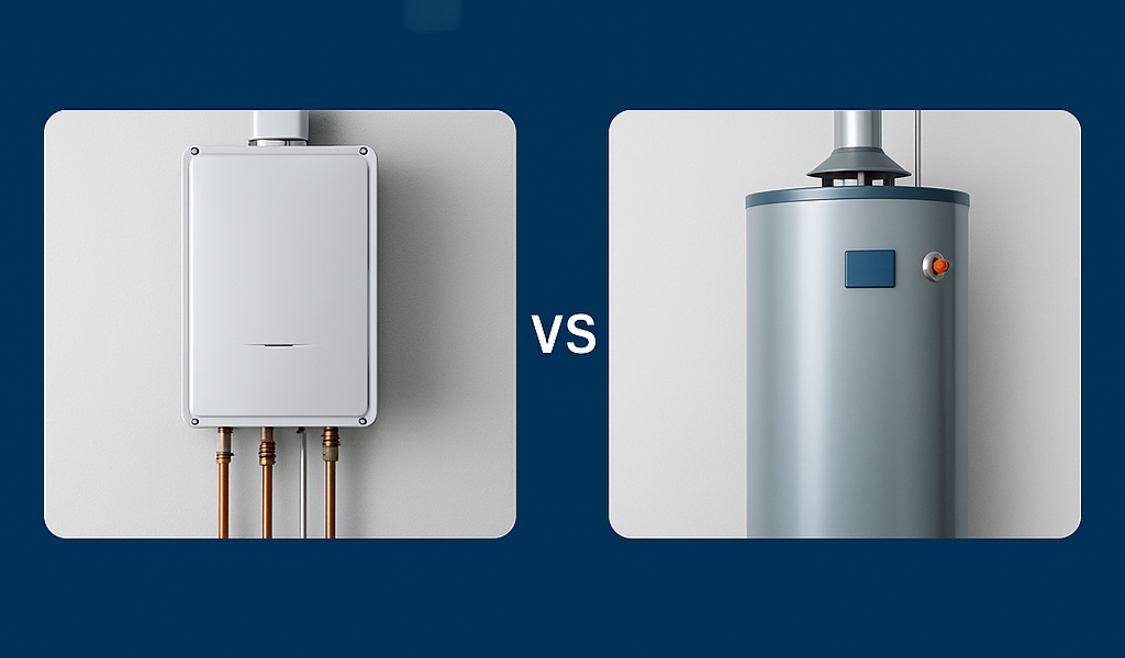
- Standard hot water tanks
- High-efficiency units
- Tankless water heaters where appropriate
We work in Metro Vancouver and surrounding communities and are familiar with local building codes, strata expectations, and typical home layouts in the region.
For more tips on maintaining gas appliances and keeping them safe and efficient, you can also check:
FAQs About Leaking Hot Water Tanks
1. Is a leaking hot water tank dangerous? It can be.
Risks include:
- Water damage to your home and neighboring units (in condos/strata)
- Mold growth in damp areas
- Electrical hazards if water reaches outlets or the panel
- Pressure problems if the T&P valve is involved
That’s why it’s so important to shut off power, shut off water if you can, and call a professional
2. Should I turn off my hot water tank if it’s leaking?
Yes. As soon as you notice a leak, you should:
- Turn off the power (breaker for electric, gas control for gas)
- Shut off the cold water supply to the tank if the valve is accessible
This helps prevent further damage and reduces risk until a plumber arrives.
3. Can I still use hot water if my tank is leaking just a little?
If your tank is leaking, using hot water can make things worse by refilling and reheating the tank, keeping the pressure up and the leak active.
Once you notice a leak:
- Treat the tank as out of service
- Shut off power and water to the tank
- Call a plumber to inspect and advise
4. How quickly should I call a plumber?
- Active spraying or heavy flow: call right away.
- Slow drip or small puddle: contain it, shut things off, and book a visit as soon as possible.
Even a “small” leak is your tank’s way of saying something is wrong.
If your hot water tank is leaking right now and you’re in Metro Vancouver or nearby areas, reach out to DDC Mechanical.
We’ll help you:
- Stay safe
- Protect your home
- Decide whether a repair or replacement makes the most sense
And we’ll walk you through each step in plain language, so you’re never left guessing.
DDC Mechanical Services Ltd. – Plumbing, Heating & Gasfitting Metro Vancouver