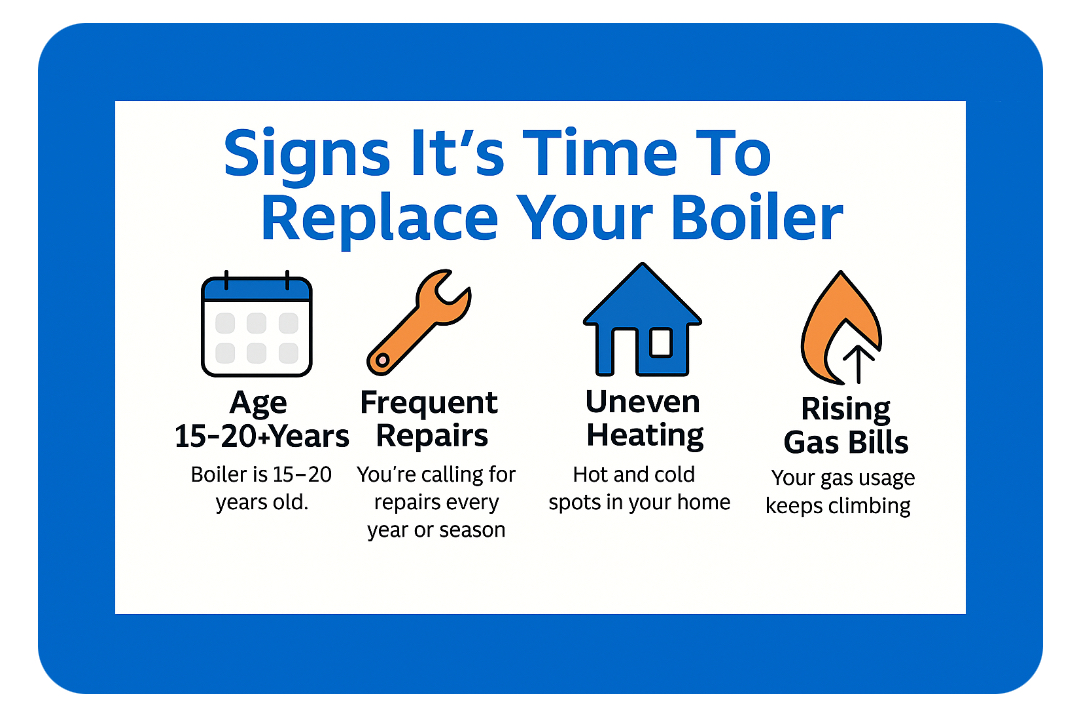

When your boiler starts acting up, it can feel like a guessing game:
Do I pay for another repair? Or is it time to finally replace the whole thing?
This decision matters more than most people realize. It affects:
- Your monthly heating bills
- Your comfort (no more “why is it freezing in here?”)
- Your safety
- Whether you’ll face a no-heat emergency in the middle of a cold, wet week
This guide walks you through 7 clear signs that it may be smarter to upgrade your boiler instead of repairing it again.
Repair vs Replace – A Simple Way to Think About It
Here’s an easy rule of thumb:
- Repair usually makes sense when:
- The boiler is under about 10–12 years old
- The issue is small and inexpensive to fix
- Replacement is worth considering when:
- The boiler is 15–20+ years old
- You’re having repeat breakdowns
- Your bills keep creeping up even though your habits haven’t changed
If you’re reading this and thinking, “That sounds like my boiler,” it’s a good time to schedule a professional boiler inspection and get clear advice on boiler repair vs boiler replacement for your heating system.
1. Your Boiler Is 15–20+
With good maintenance, most modern residential boilers last about 15–20 years before they start losing efficiency and reliability. As they age, they tend to:
- Break down more often
- Use more energy for the same amount of heat
- Need parts that are harder to find
An older boiler can quietly cost you more every month with higher gas bills, more service calls, and a greater risk of a major failure during cold weather.
Quick Check
- Look for the installation date on a sticker, manual, or old invoice.
- If your boiler is 15+ years old, start planning. You don’t have to replace it tomorrow, but you’ll be glad you didn’t wait for a crisis.
If your boiler is in that 15–20+ year range, consider booking a heating assessment so you can budget and plan before it fails.
2. You’re Calling for Repairs Every Year (or More)
One repair every few years is normal but if you’re calling your heating company every season, that’s a clear pattern. Common repeat issues include:
- No heat
- Error codes or lockouts
- Small leaks
- Pressure problems
Those “little” repairs can add up to a big number over a few years. There’s also the stress of never quite trusting your system. A good rule of thumb:
- If a single repair costs 30–40% of a new boiler, or
- You need repairs every year
It’s time to compare repair vs replacement costs, not just approve the next fix. Keep track of your boiler repair costs by making a simple list of repairs over the last 3–5 years and what you paid for each visit. If the total surprises you, it may be time to request a new boiler quote and compare ongoing boiler repair costs vs a full boiler replacement. If you see a “repair every year” pattern, ask your tech for an honest opinion on how much longer your boiler is realistically worth fixing.
3. Your Home Never Feels Evenly Warm
Signs your system might be struggling:
- One room is too hot, another is freezing
- Some radiators or in-floor zones never really warm up
- You’re always adjusting the thermostat but never feel quite comfortable
Sometimes this is a circulation or zoning issue. Other times, it’s a sign your boiler or system design isn’t keeping up. Uneven heating in your home usually means wasted energy, constant frustration (especially if kids or tenants keep complaining about “their” cold room), and a boiler or heating system that may be improperly sized or simply worn out and ready for an upgrade.
For a quick check, notice where and when cold spots appear in your home, whether they’re getting worse each winter, and mention those specific rooms and patterns to your technician so they can evaluate the boiler size, pumps, and zoning. If you’re living in sweaters and still have cold rooms, it may be time to talk about a system upgrade rather than another small patch.
4. Your Heating Bills Keep Going Up
If your usage habits haven’t changed, but your gas bills are higher each winter, your boiler might be:
- Running longer to do the same job
- Short-cycling (turning on and off too often)
- Losing efficiency as internal parts wear out
High-efficiency gas boilers can reach 90%+ Annual Fuel Utilization Efficiency and are designed to use less fuel than older, non-condensing units, which helps lower lifetime energy costs. Over a few years, the extra fuel cost from an inefficient boiler can easily add up to thousands of dollars, especially in long heating seasons. Look at your gas usage (not just the dollar amount) over the last 2–3 winters, and if your consumption is climbing and your boiler is older, it’s a strong sign it may be time to upgrade to a more energy-efficient boiler.
If your bills keep rising, ask for an efficiency assessment and a quote for a high-efficiency boiler so you can see the long-term savings side-by-side.
5. Strange Noises, Smells, or Leaks
Some warning signs you shouldn’t ignore:
- Banging, clunking, or whistling sounds
- Burning, metallic, or unusual smells
- Visible water leaks around the boiler
- Soot marks or discoloration near the boiler or vent
These can point to internal wear, pressure or circulation problems or combustion issues, which can affect safety. Yes, some problems can be repaired. But repeated noises or leaks often mean the boiler is aging out, not just having a “bad day.” Note when the sound or smell shows up (at start-up, while running, or when shutting down), and take a quick photo or video to help your boiler technician diagnose the issue faster.
If something feels off—especially smells or soot—book a service visit ASAP. Let them know what you’re hearing or seeing and ask whether they’d repair or replace if it were their home.
6. Your Tech Struggles to Find Parts
If you’re hearing things like “this model is discontinued” or “parts are getting harder to find,” it’s a sign your boiler is entering the “hard to support” stage. You may face long waits for repairs, some future failures may be impossible to fix because parts are no longer available, and you could end up needing a rushed boiler replacement in the middle of winter. Planning ahead usually saves money and stress compared to a rushed, emergency install.
Next time your boiler is serviced, ask your technician whether parts for your model are still easy to get and, if it were in their own home, whether they would repair it or start planning a replacement. If your tech hesitates or warns about parts, ask for pricing and options now so you can plan rather than panic later.
7. Your Home Has Changed, But the Boiler Hasn’t
Your boiler might have been sized for an earlier version of your home—smaller square footage, no finished basement or suite, and older windows and insulation. If you’ve since finished a basement or attic, added a rental or in-law suite, upgraded windows or insulation, or added/expanded in-floor radiant heating, your home’s heating load has changed and your current boiler or heating system may no longer be properly sized. When a heating system is too small or poorly set up for the home, you’ll often see uneven heating, higher energy bills, and more wear and tear on the boiler, which are all signs it may be time to review your system and consider a boiler upgrade or replacement.
For a quick uneven heating check, pay attention to where and when cold spots appear in your home. Notice if they’re getting worse each winter and share those details with your boiler or heating technician so they can assess the boiler size, pumps, and heating zones.
Did You Know? Boiler Efficiency by the Numbers below:
- Older boilers: often 56–70% AFUE, wasting a large share of fuel.
- New standard boilers: typically 80–88% AFUE.
- High-efficiency condensing boilers: 90–98.5% AFUE, so almost every dollar you spend on fuel goes into heating your home.
- Space heating: around 60%+ of home energy use, which means improving boiler efficiency is one of the fastest ways to lower heating bills.
Repair or Replace? How a Good Tech Decides
When a heating professional comes to your home, they should look at:
- Boiler age
- Type and cost of the current problem
- Repair history over the last few years
- Your heating bills and comfort complaints
- Any safety concerns (gas, venting, CO risk)
- Parts availability
- Your future plans (renovations, renting, selling, staying long-term)
When You Shouldn’t Wait
Call a professional right away if you notice:
- Smell of gas
- A carbon monoxide alarm going off
- Symptoms like headaches, nausea, or unusual tiredness when the boiler is running
- A major water leak around your boiler
These are urgent safety or damage issues, not “wait and see” problems. If you suspect a gas or CO issue, turn off the system, leave the area, and call for help immediately.
Ready to Talk About Your Heating System?
If you’re in Metro Vancouver and stuck between repairing again or finally replacing your boiler, you don’t have to guess. A proper assessment can:
- Check the health and efficiency of your current system
- Lay out repair vs replacement with real numbers
- Help you choose what fits your home, comfort level, and budget
Want a clear answer on your boiler?
Book a heating assessment. We’ll walk you through your options so you can make a calm, confident decision—without pressure.
FAQ – Boiler Repair vs Boiler Replacement
How long does a boiler usually last?
Most modern residential boilers last about 15–20 years with regular maintenance, though some can last longer depending on installation quality and usage.
Is it worth repairing a 20-year-old boiler?
If the repair is small and inexpensive, maybe. But for larger repairs on a 20+ year-old boiler, it often makes more sense to invest in a new, high-efficiency model rather than keep pouring money into an aging system.
How do I know if my boiler is still efficient?
Look at:
- The age of the boiler
- The type (older non-condensing vs newer condensing)
- Your gas usage over the last few winters
High-efficiency condensing boilers are designed to use less fuel and can significantly reduce energy use compared to older non-condensing units.
Should I replace my boiler before it dies completely?
In many cases, yes. Replacing before a total breakdown means:
- You choose timing that works for you
- You’re not rushed into whatever model is available
- You avoid being without heat during a cold snap
Can a new boiler really lower my heating bills?
Yes. A properly sized, high-efficiency boiler with modern controls can use significantly less gas than an older unit, especially in climates with long heating seasons. Over time, those savings can help offset the cost of the upgrade.
DDC Mechanical Services Ltd. – Plumbing, Heating & Gasfitting Metro Vancouver